OTDR Testing in Qatar: What It Is, Why It Matters, and How to Get It Right
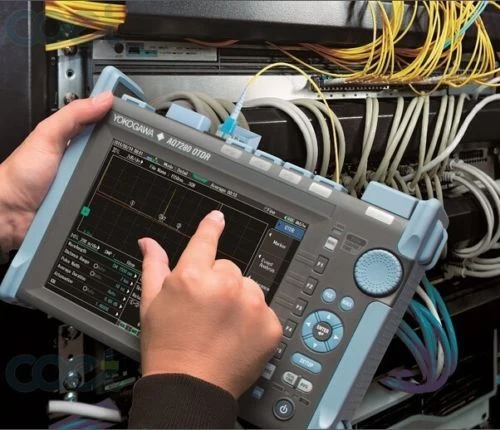
If your fibre optic network is underperforming — slow speeds, signal drops, unexplained outages — OTDR testing in Qatar is usually the fastest way to find out exactly why. It tells you where the problem is, what caused it, and how severe it is. All without digging up a single metre of cable until you know you have to.
Qatar’s infrastructure has grown fast. From Lusail smart city to new Hamad Medical City expansions, fibre runs under roads, through industrial zones, and across data-heavy facilities that can’t afford downtime. When something goes wrong in a network like that, guesswork is expensive.
What Does OTDR Testing Actually Do?
OTDR stands for Optical Time-Domain Reflectometer. It works by sending short pulses of light down a fibre cable and measuring what bounces back. Every bend, splice, connector, and break leaves a trace. The equipment reads that trace and produces a report showing signal loss at every point along the cable run.
Think of it like sonar, but for light. You get a map of your entire cable — faults included — without having to open junction boxes or guess which section to check first.
What it picks up:
- Fibre breaks and physical damage
- High-loss splices from poor fibre optic splicing work
- Connector reflections and degradation
- Excessive bending or micro-bends
- Partial blockages or crush damage in the duct
For anything critical — a data centre, a government facility, an oil & gas site — this kind of documentation matters. It’s also what insurers and project engineers ask for when something goes wrong.
Who Needs OTDR Testing in Qatar?
Honestly, any organisation running fibre should be testing it. But in practice, the most common requests come from:
Telecom operators
Who need to verify new cable runs before they go live, or diagnose drops in an existing network.
Government organisations and ministries
Rolling out secure infrastructure that requires certified testing documentation.
Oil & gas facilities
In Ras Laffan and other industrial zones, where fibre carries process control data and a network fault can have serious operational consequences.
Construction companies and developers
Completing ICT infrastructure for handover — particularly on projects where MOTC or client engineers require Fluke testing in Qatar alongside OTDR results.
Enterprises and IT managers
Who need baseline test reports after a new office build or data centre fit-out, or after a fibre incident.
Facility managers
Dealing with intermittent faults that their team can’t locate with basic tools.
OTDR Testing in Qatar: What the Process Looks Like
The process is more straightforward than most people expect.
1. Site survey and cable identification
Before testing starts, the team identifies which cables need testing, maps the routes, and checks access points. For large sites, this might take a few hours. For a single building, it’s usually done in the same visit.
2. Baseline or fault-finding test
The OTDR unit connects at one end of the cable. It runs multiple pulses at different wavelengths — typically 1310nm and 1550nm — and captures a full trace. For single-mode fibre, both wavelengths are standard. Multimode fibre is tested at 850nm and 1300nm.
3. Trace analysis
The technician reads the OTDR trace, identifies any events above the loss threshold, and flags anything that needs attention. A clean trace takes minutes to confirm. A problematic one requires more time to diagnose properly.
4. Report and recommendations
You get a written report with trace data, event tables, and pass/fail status for each fibre. If remedial work is needed — a re-splice, a connector replacement, or fibre optic duct blockage repairs — that gets documented separately so you know the scope before any work begins
Beyond OTDR: Other Fibre Services You Might Need
OTDR testing often sits alongside other work. Here’s what frequently comes up on the same job:
Fibre optic splicing in Qatar
If the OTDR trace shows a high-loss splice, it needs to be redone. Good splicing brings loss down below 0.1dB per joint on single-mode fibre.
Fibre blowing service Qatar
For new duct routes where cable needs to be installed before testing can begin. Blown fibre is faster to install and easier to replace later compared to direct burial.
Fluke testing in Qatar
Fluke’s OFP (OptiFiber Pro) and DSX cable analysers are used alongside OTDR for certification testing. Many projects, especially those with structured cabling standards like TIA-568 or ISO/IEC 11801, require Fluke certification reports as part of handover.
Fibre optic duct blockage repairs
A blocked duct discovered during a fibre blowing job needs clearing before any cable can go in. Rodding, jetting, and duct inspection cameras are typically used.
Fibre optic cable accessories in Qatar
Enclosures, patch panels, splice trays, and connectors. Getting the right accessories matters more than people think; cheap splice closures cause more repeat faults than almost anything else.
How to Choose the Right OTDR Testing Provider in Qatar
A few things worth checking before you commit:
Equipment matters
The best results come from tier-one OTDR units — JDSU (Viavi), EXFO, or Anritsu. Ask what equipment the team uses. If they can’t tell you the model, that’s a flag.
Technician certification
Look for FOA (Fiber Optic Association) certified technicians, or at minimum technicians with demonstrable project experience in Qatar. Networks in this region have specific considerations — sandy environments, high-temperature cable routes, long duct runs under roads.
Report format
You should receive a digital report with raw trace files (.sor format), not just a summary sheet. SOR files can be reopened in any OTDR viewer for independent verification.
Turnaround
For active fault-finding, a good provider can turn around results and recommendations the same day. For large-scale certification testing, agree the timeline upfront.
Frequently Asked Questions (FAQ)
For a single fibre link, testing takes 15–30 minutes including setup. For a full structured cabling installation across a large building, allow one to two days depending on the number of fibres and routes.
OTDR testing maps signal loss along a fibre using light pulses — it's diagnostic and finds faults. Fluke testing (using instruments like the EXFO or Fluke OFP) provides certification data against a specific standard. Most handover projects in Qatar require both.
Not directly — OTDR tests fibre inside a duct, not the duct itself. If the fibre is already installed, OTDR can detect damage caused by a crush or blockage. If the duct is empty, you'd need a duct inspection camera or a mandrel pull test.
It's required or strongly recommended on most commercial and government projects. MOTC-registered contractors typically include OTDR certification as part of their project documentation. Check your project spec — it will usually state the testing standard required.
Pricing depends on the number of fibers, the length of the run, and whether reporting is included. Most providers price per fibre, per link, or as a day-rate. Get a written quote with a clear scope before agreeing anything.
The test report will identify the fault location to within a metre or two. From there, it depends on the fault type — a bad splice can be redone on the same visit; cable damage may require a section replacement or a full fibre blowing service to re-route.
Ready to Book OTDR Testing in Qatar?
Whether you’re certifying a new cable run, chasing down a fault, or need documentation for a project handover, our team handles OTDR testing across Qatar — from single-building jobs to multi-site infrastructure projects.
We work with telecom operators, government contractors, oil & gas facilities, and enterprise clients. Test reports are delivered in digital format with raw SOR files included.
Get in touch for a quote or to discuss your project requirements.
Latest Post

FTTx Solutions in Qatar: FTTH, FTTB and FTTC Explained
Micro-Duct vs Conventional Fiber Optic Systems in Qatar